From the Editors (Nadra.info): Land disturbance caused by open-pit mining during the extraction of mineral resources is a pain point for communities across Ukraine. And this issue goes far beyond the consequences of uncontrolled amber mining or the state’s chaotic attempts to remedy the situation. Public concerns about land disturbance and the lack of proper reclamation often become an obstacle to plans for developing mineral deposits — even when the project is undertaken by a responsible, socially accountable business. Unfortunately, these concerns are not unfounded, as far from all subsoil users restore disturbed areas properly — if they carry out reclamation at all.
Reclamation issues are gaining particular importance today, as the State Service of Geology and Subsoil of Ukraine is opening up the industry, removing its former “exclusivity” and attracting new investors who have never worked in the subsoil sector before.
That is why we decided to ask several major subsoil users with proven experience to share their approach to reclamation*. The first to respond was the VESCO Group of Companies (4 companies, 12 special subsoil use permits).
Reclamation Matters
Safety, health protection, and environmental stewardship are top priorities for companies that conduct business responsibly. Reclamation of exhausted land is one of the key tools for delivering on these priorities, and for VESCO enterprises it is a core focus.
First, restoring areas affected by open-pit mining during the extraction of mineral resources helps replenish land withdrawn from agricultural use and improves living conditions in mining regions by minimizing the environmental impact of operations. This is a strategic objective of the company’s social responsibility agenda.
Second, reclamation requirements are enshrined in legislation: they are stipulated in special subsoil use permits, in quarry development and reclamation projects, as well as in a number of laws and codes of Ukraine.
Third, beyond the reasons outlined above, reclamation is also economically justified for VESCO. It enables the company to prepare reclaimed areas annually and return them to municipal ownership and land users, thereby reducing the amount of land leased by the enterprise.
Simply Flooding a Quarry Is Not a Solution
For VESCO, flooding quarries is an unacceptable approach. All areas are subject to reclamation once mining operations are completed. The company applies two main reclamation pathways: agricultural and forestry.
Depending on the land restoration type defined in the project, VESCO either fully restores forest plantations or carries out agricultural reclamation on approximately 80% of the area and forestry reclamation on about 20%. This approach takes into account the possible formation of slopes that are unsuitable for agricultural use.
Over the past five years, VESCO Group enterprises have carried out agricultural reclamation on a total area of 223 hectares and, as part of forestry reclamation, planted forests and perennial grasses on 268 hectares.
A total of 184 hectares have been returned to land users for agricultural use, including 145 hectares of arable land and 39 hectares of pastures.
Reclamation Is About Balance
VESCO places special emphasis on minimizing the environmental impact of its operations. That is why reclamation is a crucial and integral stage of the mineral extraction process. Our goal is to develop the business while balancing economic interests with ecological stability, ultimately returning reclaimed lands with an environmentally acceptable landscape.
We achieve this goal by applying environmentally efficient technologies in clay mining operations. Particular attention is given to improving soil quality through the application of fertilizers during agricultural reclamation, thereby returning land to users in better condition. We also optimize soil composition during forest plantation, enhancing the survival rate of the seedlings.
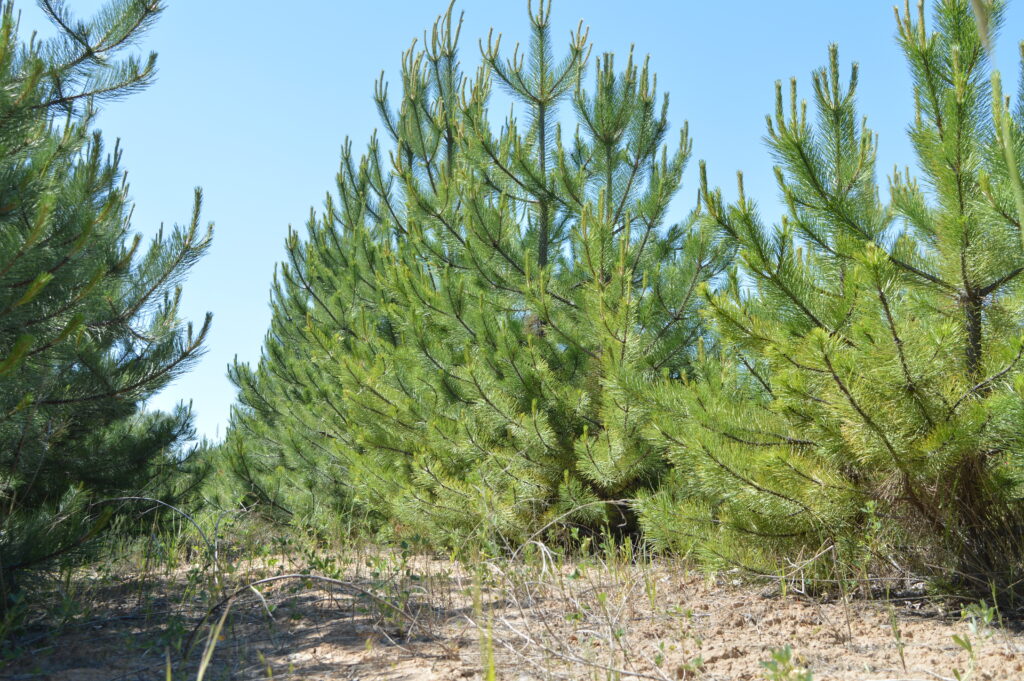
Taking into account its strategic goal focused on environmental responsibility, the company sets the task of reclaiming all categories of disturbed lands, as well as adjacent plots. Land management and technological design of the sites are carried out in strict compliance with international design standards, ensuring careful treatment of nature.
Reclamation is a multi-stage process
The restoration of exhausted lands and their transfer to land users is carried out continuously. Usually, part of the reclaimed areas of active quarries is returned.
There is successful experience in carrying out a comprehensive set of reclamation works at Quarry No. 3.4 of PJSC “Ogneupornerud” after the full completion of quarry operations. The quarry was developed from 2009 to 2016 over an area of more than 100 hectares. When the land was transferred to municipal ownership, no violations regarding the completed works were found, and the land is now actively used for agriculture.
The reclamation process involves a significant volume of work, carried out in three consecutive stages: preparatory, technical, and biological, in accordance with the requirements of DSTU 17.5.1.01.
The preparatory stage of reclamation includes surveying already disturbed or developing lands, conducting technical and economic justifications, and preparing technical working reclamation projects.
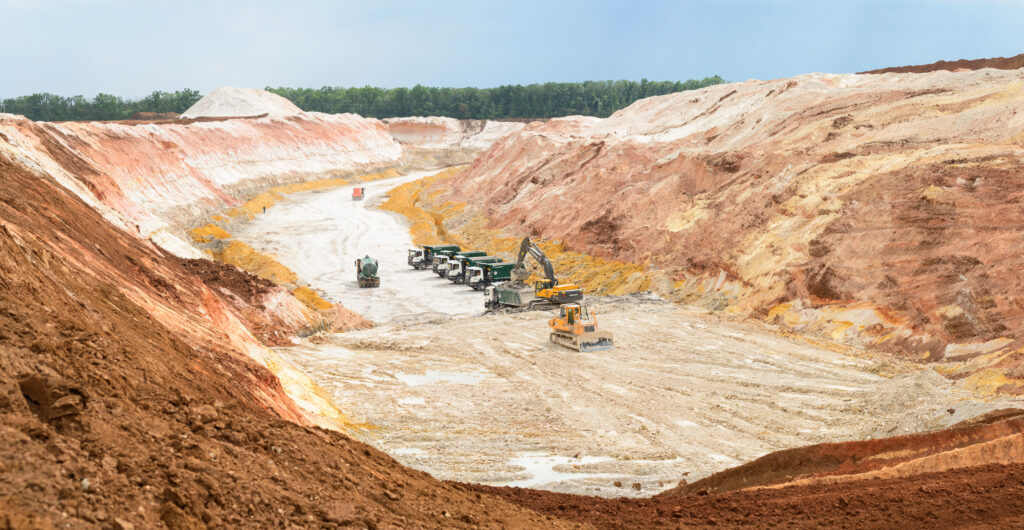
The mining-technical reclamation stage takes place when the mined-out space of the quarry is backfilled with overburden and the natural landscape is restored, preparing the land for agricultural and forestry works. Then follows the biological stage. Here, there are two types of land restoration, the choice of which depends on their future use and purpose. If the area is to be used for agriculture, the agricultural land landscape is restored. The land can also be used for forestry plantations.
Thanks to a series of experiments, employees of VESCO’s forestry reclamation unit have developed the optimal formula for successful forestry reclamation—planting both coniferous and deciduous trees. On spoil heaps, trees are planted manually. On flat surfaces, the work is facilitated by a planting machine. The saplings are cared for over three years, with weeding and monitoring of survival rates.

If the project involves agricultural reclamation, mechanized seeders are used. Ground-covering grasses—tall fescue and nitrogen-rich sainfoin—are sown after the application of mineral fertilizers. These grasses are optimal for soil restoration. The pastures are maintained for three years, with regular mowing. After three years, the pastures are handed over to the landowners, suitable for livestock grazing, and can later be converted into fields for agricultural use, so-called arable land.
Planting of saplings and sowing of grasses begins early in spring to ensure high survival rates of the saplings and good grass germination before the onset of hot summer weather. The survival rate of saplings on VESCO’s reclamation sites is quite high—86–90%.
Three years after the biological reclamation, soil analysis is conducted and an agrochemical passport for the land plot is prepared. The final indicators confirm that the company has fully fulfilled its obligations and that the soil is suitable for further use.
Is reclamation expensive?
In 2020, the costs of mining-technical and biological reclamation across VESCO Group’s sites exceeded UAH 60 million, amounting to approximately 8% of the period’s production expenses.
As an example, to illustrate the cost of forestry reclamation carried out by a contractor, planting seedlings of acacia, rosehip, maple, elm, ash, privet, and smoketree on an area of 27 hectares this spring will cost the company UAH 653,000.
Reclamation is a matter for specialists
Development and reclamation projects are carried out both by VESCO’s in-house specialists and by contracted organizations, considering the need to execute a large number of projects simultaneously. The main requirements for a contractor developing a project are the presence of a certified Chief Project Engineer (GIП) with a qualification certificate from the Architectural and Construction Certification Commission of the Ministry of Regional Development, as well as experience in designing similar deposit development projects with positive conclusions from multiple expert evaluations. This can be either a state organization or a private company.
Within the technical department of VESCO Group, project development is carried out by one Chief Project Engineer (GIП) and two design engineers. Depending on the complexity of the site, the design process can take from 6 to 24 months. Over the past three years alone, 26 development and reclamation projects have been developed for VESCO Group enterprises, with 11 currently undergoing the required expert evaluations and another 3 still in the development phase.
Reclamation equipment
Depending on the approved reclamation project, either motorized or non-motorized methods may be used to carry out the work.
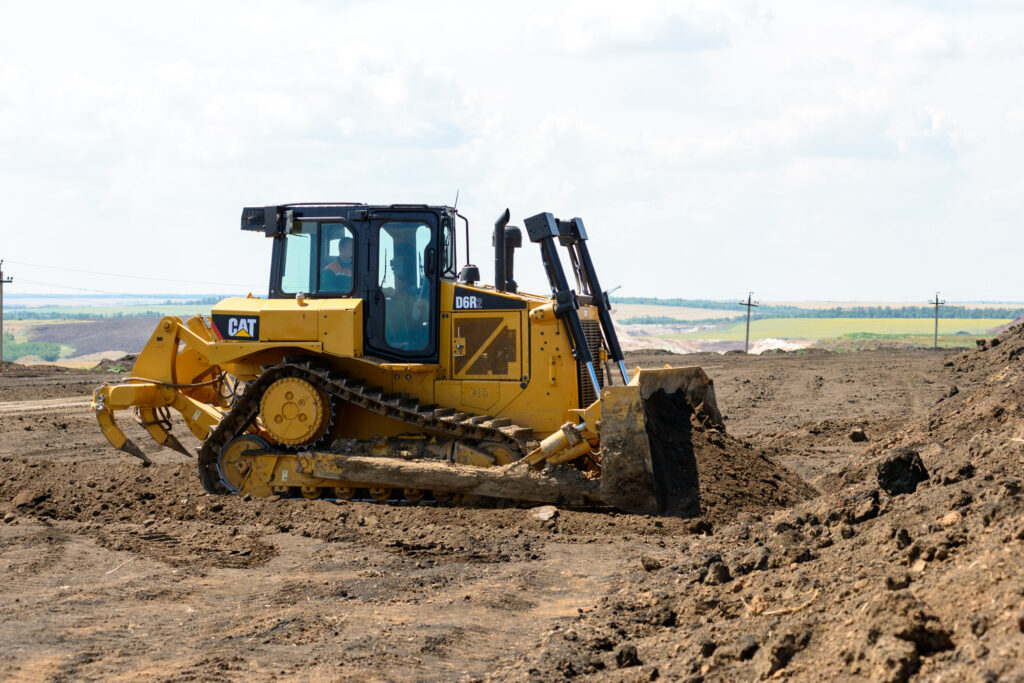
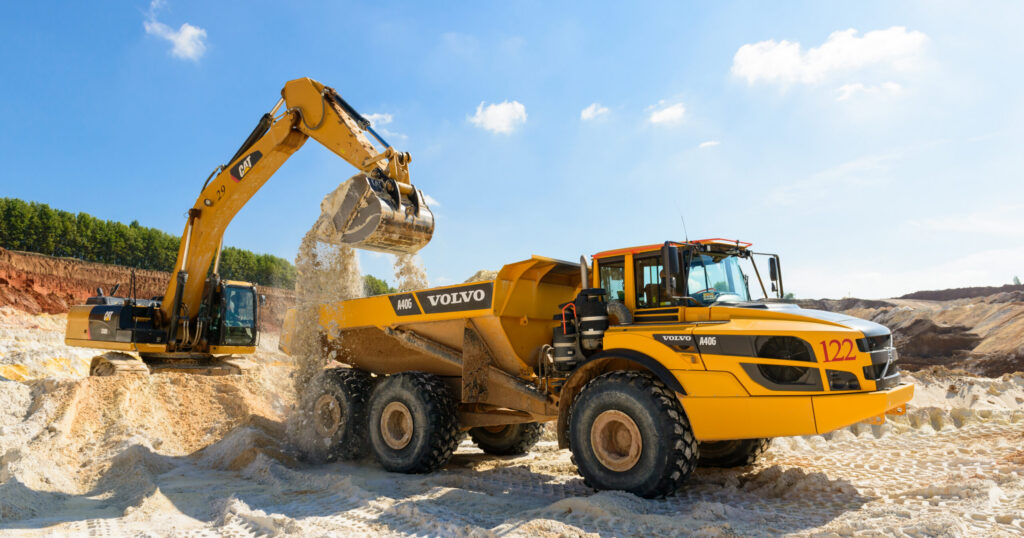
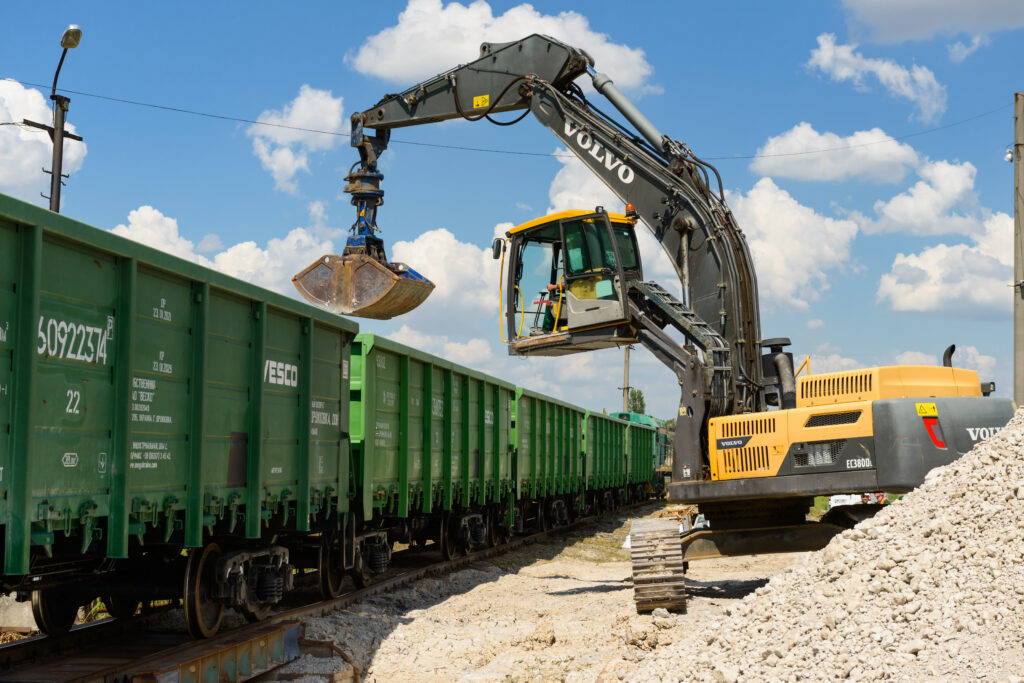
The motorized scheme involves the use of up to eight overburden complexes, consisting of Volvo EC 480 and CATERPILLAR 336D2L excavators, Volvo FMX, Volvo A40G, and Scania P440R dump trucks with a capacity of up to 40 tons, as well as Dresta TD-20 and CAT D6R bulldozers. This technological equipment is operated by over 200 employees of the overburden works department.
The non-motorized system involves performing work with walking excavators of the ESh 10/70 and 11/70 types, manufactured by NKMZ. The company operates 10 units, managed by 90 personnel.
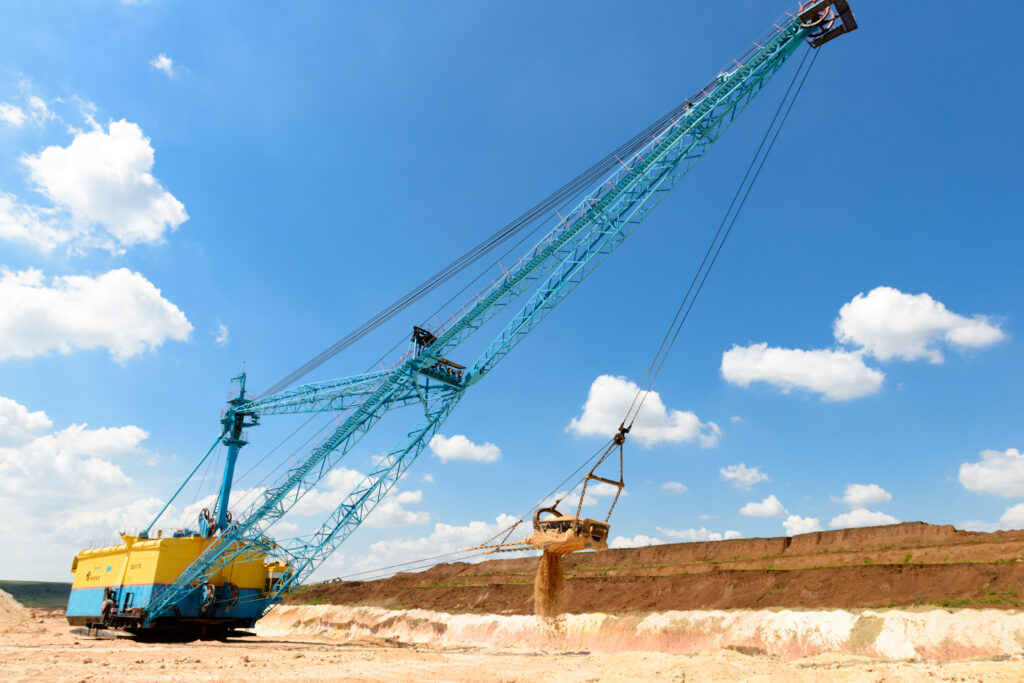
The volumes of overburden removal and reclamation work are planned based on the required amount of raw material to ensure full delivery to clients. Reclamation is carried out simultaneously with overburden operations. In case of increased product demand, the volumes of overburden and reclamation work are increased, and VESCO may engage subcontractors to perform part of the work. The main criteria for selecting a subcontractor are the availability of modern equipment that meets international standards and qualified personnel.
Agricultural reclamation and maintenance of forestry areas are carried out by VESCO’s forestry reclamation unit. Initial forestry work and planting of seedlings during the maintenance period are fully performed by subcontracted organizations.