

Interview with Dmytro Kostornichenko for Asian Ceramics
Ukraine clay supplies Ukraine has resumed exports of clay, prized the world over for its high quality. However, the future is fraught with uncertainty as Russia occupies or claims some of Ukraines mineral-rich regions, writes Rohan Gunasekera.
The war made Ukraine better known for being a major agricultural exporter of key commodities, such as wheat, corn and sunflower oil, as consumers faced shortages and high prices. But beneath the fertile soil that earned it the reputation of being the ‘breadbasket’ of Europe lies a vast trove of minerals that makes the country an important global producer of primary raw materials, such as titanium, manganese, iron, and zircon. In the minerals and ceramics industries, Ukraine is best known as one of the world’s leading suppliers of high-quality clays, which are particularly sought after by tile manufacturers for their whiteness and high mechanical and bonding strength.
Initially, the Russian invasion in February 2022 disrupted exports of clay since many of the mines were located in or near the war zone, and blockade and bombardment of ports prevented shipments to overseas markets. The disruption spread panic among ceramic tile producers near and far, especially in Ukraine’s main markets in Spain and Italy, as well as Bangladesh.
Faced with a spike in natural gas prices and a shortage of a key raw material, these producers scrambled to find alternative sources of clay and change their batch formulations.
The war forced top European multinational minerals suppliers, who had bought mines in the Ukraine following the collapse of the Soviet Union and Ukraine’s opening up to the West, to suspend their Ukrainian operations. The uncertainty and risks generated by the fighting raised fears European tile manufacturers could lose market share to cheaper Asian producers while also opening up opportunities to suppliers of similar clays from Asia.
In recent weeks, however, Ukrainian clay exporters have resumed shipments via new logistics routes. Most businesses have recovered, demonstrating resilience and agility. While Ukraine’s highly regarded clay is now available, its price is high. The location of mines near the frontlines, with some of Ukraine’s main mines and mineral deposits now under Russian control, creates uncertainty, raising the risk they might not be available in the future.
“The situation in the Ukraine remains complicated with daily battles between Ukrainian and Russian forces,” says Dmytro Kostornichenko, sales director at Vesco Group, the leading Ukrainian producer of clays and part of umgi.
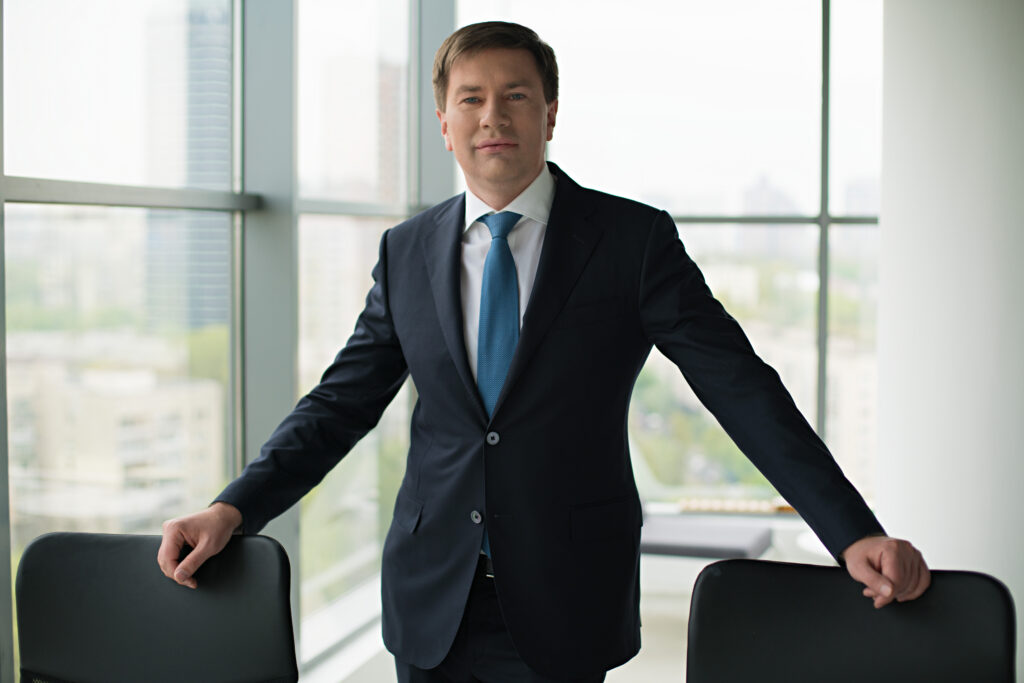
“Vesco’s clay mines are located in the Donbas region, which Russia claims. However, our mines are in Ukrainian-controlled territory because Russian forces were able to take control of only parts of the Donbas region. So, we are able to continue production and shipments.
“We have 18 mines spread out over the Donbas region and we have suspended operation of those which are close to the frontline for security reasons,” Kostornichenko says, speaking to Asian Ceramics. “We are using only the safest quarries from which we are able to offer our complete range of products. We do continuous shipments from these mines.’
In February 2023, Ukraine’s government unveiled mining reforms aimed at reviving investment in its rich mineral deposits.
As part of its economic recovery initiative, the Ministry of Economy has opened a slick, simple online user interface inviting investors to talk business and promising feedback on individual projects in 48 hours. It displays the bureaucracy’s digital prowess that keeps most public services accessible to the people even as fighting continues, mainly owing to the high level of digitalisation that has proved effective since the COVID-19 pandemic. Although the country’s in recession with heavy damage to infrastructure, key systems like banking, telecoms and public services continue to function. Some bottlenecks emerged at border crossings as logistics systems like railroads suddenly took on a bigger share of the burden of shipping key commodities, with seaports closed.
In March 2023, the International Monetary Fund (IMF) approved about $15.6 billion in funding, part of a $115 billion total support package for Ukraine. This includes near-term priorities to ensure macroeconomic and financial stability and undertake critical structural reforms as the war continues, such as carrying out essential governance reforms to fight corruption, which has long been seen as a major problem and is important for gaining EU membership and investor confidence.
Foreign direct investment in Ukraine remained low compared to other markets with the country experiencing a net outflow of FDI in 2020. In addition to the pandemic, investors have cited corruption – particularly in the judiciary – as a key impediment to doing business in Ukraine. Western think-tanks assessing Ukraine’s potential to recover from the war say reforms will have to break the power of oligarchs and vested interests and create a level playing field for Ukrainian businesses of all sizes free of the undue influence of corrupt actors.
Ukraine’s kaolin production is estimated to have fallen to 600,000 metric tons in 2022 from 2.3 million tons in 2021, according to the US Geological Survey (USGS) Mineral Commodity Summaries 2023.
Ukraine exported 64.1% of kaolin produced domestically in 2021, states the GMK Center, a Ukrainian think-tank. Top consumers include ceramic tile manufacturers from Italy and Spain. In recent years, Spanish ceramic manufacturers had switched from using locally mined red clays to white clays, mostly imported from Ukraine.
Some of the leading European mineral groups, such as Sibelco, Imerys and AKW, have established operating subsidiaries in Ukraine’s clay sector. Prior to the war, Donbas Clays PJSC, a Sibelco subsidiary, produced 1.3 million tones of high-quality plastic clay annually from its three mines located at Mertsalovo in the Donetsk region.
Vesco Group sold 2.4 million tonnes of clay in 2020, exporting about 84% of it, the largest consumers being ceramic tile manufacturers in Spain, who accounted for over 26% of sales. According to the company’s website, its production capacity exceeds three million tons a year, and its products are exported to more than 25 countries worldwide.
Vesco warehouses allow for the storage of up to 900,000 tons of ready-made clays and more than two million tons of semi-finished products at a time, ensuring consistent shipments of raw materials to customers. The company operates 375 open top wagons and claims that the availability of its own rolling stock provides an additional guarantee of stable clay delivery to its customers worldwide.
In August 2022, Vesco announced clay shipments had resumed after a few months of suspension as people and equipment were evacuated. Even with the temporary suspension of the company’s operations, there was enough accumulated stock that could be shipped. Its sales director, Kostornichenko, was quoted at the time saying that the company shipped 100,000 tons per month.
Kostornichenko, speaking to Asian Ceramics in March, confirmed Vesco mainly ships raw clay, rather than processed clay, with only some preliminary preparation, such as crushing and blending to ensure consistency, since its product is naturally of a high grade and does not require any processing.
“Vesco has built new logistics channels for shipments of clay,” he says. “Previously we were shipping from Ukrainian ports but these were shelled by the Russian navy and cannot be used. So, we have to ship material from ports in neighboring Poland and Romania from where we can ship worldwide. Although this is at a higher logistics cost, at least our material is available in the market. The clay is sent to the ports by rail, first to the Ukrainian border. Because Ukraine’s railroad is of a different gauge, the clay is then transhipped or transferred to Polish wagons. The shipments to Romania are done the same way.”
Adding further, Kostornichenko says: “We have clays to suit any market. Now we have re established our relationships with Asian buyers such as Taiwan, Thailand and Bangladesh. At the beginning of the war, our shipments to Asian customers were disrupted and we lost some of them as these buyers did not have confidence in getting our supplies and switched to different sources and maybe changed their clay formulas as well.
“But now our material is available. Unfortunately, though, because the logistics are more complicated and longer, the clay has become more expensive and not all customers are ready to accept it at the increased price. We are now making some clay shipments to the Middle East as well.”
Because of the logistic disruption caused by the war, Vesco’s prices for delivery have increased by $80 to $100 a ton although ex-works prices remained unchanged. The company’s prices to different markets are different, depending on the distance, grade, packaging and type of shipment, and can range from $60 to $300 a tonne. It ships clay by container as well as in bulk, depending on the consumer.
“It is mainly tile producers who consume our clay products, which are considered the best solution for tile manufacture,” says Kostornichenko. “Some of our clay is bought by tableware manufacturers and not so much by sanitaryware producers.”
While Kostornichenko acknowledges that ceramic manufacturers have the option of using clays from other sources, such as India instead of Ukrainian clays, he stresses that because these clays have a different geological composition, processing is different and the result in production differs. Asked about Vesco’s prospects of increasing sales to Asia and whether they can take market share from multinationals that suspended mining in Ukraine, Kostornichenko replied: “Yes, we are definitely looking to expand sales of our clays in Asia, now that we have re established our relations with Asian buyers.
“Although we technically can expand our market share since major international raw material suppliers have suspended their operations in the Ukraine, our product is now the most expensive in the market, which limits our ability to expand market share. Technically, our products are used only in premium ceramic products which need high quality of raw material. For medium and lower quality products, local clays are used in different markets, depending on the region.”The belgian multinational Sibelco says its operations in Ukraine were effectively suspended following Russia’s invasion in late February 2022. An emergency action plan was activated and all employees safely evacuated. The suspension of activities in Ukraine led to a €38.2 million impairment of Sibelco’s investments, with the company assuming that operations on its sites will not return to pre-war levels before 10 years.
“Our Ukrainian ball clays are used mainly in the manufacture of large format porcelain tiles across Europe and beyond,”
Sibelco states in its annual report. “The ceramic tile sector was significantly impacted by the absence of Ukrainian plastic clays, caused by the ongoing conflict with Russia, as well as soaring energy costs which forced some customers to reduce production, especially in Italy and Spain.
“We were able to partially offset the absence of materials from Ukraine with alternative solutions from our UK and German operations, whilst increased sales of speciality minerals and Turkish feldspar also helped to compensate for the loss in southern Europe.”
In Asia, the opening of Sibelco’s new clay blending platform in Gujarat, India, helped to ease the absence of Ukrainian clays as production capacity increased over the course of the year.
“And despite the ongoing conflict, we managed to maintain a steady supply of Ukrainian materials to customers in Poland via rail,” Sibelco notes.
Sibelco kaolin, used in ceramics to control casting rates, provide stability and to improve body whiteness and fluidity, is mined and processed in the UK,
Germany, Czech Republic, Portugal, Spain, Thailand and Malaysia.
In 2020, Sibelco bought two producers of high-quality clay in the Donbas region of Ukraine, Euromineral LLC and Kurdyumovsky Plant PrJSC. The acquisition added 400,000 tonnes of annual capacity to Sibelco’s product portfolio.
“The market for tiles and ceramics is evolving rapidly with growing demand for high-end ceramics products such as slabs and technical porcelain tiles and increasing demand for whiter, wider and more wear-resistant tiles,” Sibelco says.
“The best quality raw materials for the tile industry are without question Ukrainian clays, which offer a number of advantages including high mechanical and bonding strength and the ability to guarantee reduced linear shrinkage and consequently superior flatness in the case of large sizes.”
Sibelco ball clay is used to create large (3.2m x 1.6m) tiles, as well as smaller tiles, making them wider, whiter and stronger. Its kaolin is used to make ultra-white tiles.
According to Sibelco, Ukrainian ball clays have higher bonding strength at both green and dried stage, which can increase the module of rupture of the porcelain tile body with the aim of reducing losses during tile production.
Ukrainian ball clays also have white-firing colour, whichporcelain glazed tiles, improves colour development in coloured unglazed porcelain tiles, and reduces the usage of whitening agent in super-white bodies. They have low firing shrinkage which can increase tile size and support the flatness of larger sized tiles and low level of organic matter that allows a fast-firing cycle.
Imerys SA, the French multinational group that specialises in the production and processing of industrial minerals, says operations have been suspended at its two production facilities in Ukraine since the beginning of the conflict. These operations contributed to revenue by about €20 million in 2021. The group does not own any industrial assets in Russia.
In 2022, Imerys recognised €18.3 million in restructuring expenses and asset write-downs with respect to its operations in Ukraine and Russia, according to its annual report. Imerys’ site in Ukraine produced a full portfolio of kaolin for diverse industries, such as tableware, sanitaryware, tile and white cement.
India’s Ashapura Group says that although global demand and growth are expected to be relatively tempered on account of rising interest rates and prices, there has been a structural reorientation in the flow of goods and services amongst the world’s major economies.
“If these geopolitical headwinds persist, there could be sustainable opportunities for your company, both in the export market as well as in India,” the company told shareholders. “For example, Ukraine has been a large global exporter of white performance minerals to India and to other countries in South Asia.
The supply disruptions on account of the conflict in the region has translated into significant opportunities for the company’s multi-mineral portfolio.”
Ashapura Group says the outlook for 2023 looks positive on account of firm domestic demand in India and the structural reorientation of global mineral supply chains in the export market. “The company is well placed to cater to Asia’s largest economy in light of its tendency to increase ore imports from Africa versus Australia furthermore it white performance mineral portfolio is poised to replace exports from Ukraine that have been disrupted by the turmoil in the region.”
A key market for clay in Asia is Bangladesh where tile producers have been worried about the disruption to Ukrainian supplies. About 95% of the raw materials used in the production of ceramics items in Bangladesh are imported. Tile production capacity in Bangladesh is set to increase further to support the country’s growing construction sector with RAK Ceramics, the multinational ceramic tiles and sanitaryware maker, planning a new factory.
In March 2022, Bangladesh Shipping Corporation had to abandon one of its ships set to take ball clay from a Ukrainian port before travelling to Italy after a missile attack killed a sailor.
After the war disrupted supplies, five big Bangladeshi companies, including Akij and Abul Khair, importing clay from Ukraine were forced to import from other sources, compromising on price and quality. Akij Group director Khourshed Alam says the quality of Ukrainian clay is relatively better while its prices were at least 10% lower than that of other European countries.
Last year, the Akij Group imported clay from Malaysia. RAK Ceramics is building a new tile factory in Gazipur that will provide value-added products to local customers with the importation of raw materials for the production of tiles, thus reducing the competitive advantages in exports.
The new plant will raise RAK Ceramics daily tile production capacity by an estimated 15,000 square metres, taking the annual production capacity to 15.50 million square metres. The company’s current annual production capacity is 10.32 million square metres of tiles and 1.45 million pieces of sanitaryware. The new machinery will be imported from Italy and Spain with production set to begin in 2025.
Ukraine contains about five per cent of the world’s mineral resources, according to Hanna Liventseva, chairman of the Board of Ukrainian Association of Geologists. The country ranks among the world’s top 10 for several raw materials, such as titanium, ball clays, Ferro Manganese, an alloy of iron and the world’s top 10 for several raw materials, such as titanium, ball clays, Ferro Manganese, an alloy of iron and manganese, Ferro Silico Manganese alloys, containing silicon, manganese and iron, and gallium. The presence of lithium and graphite is also evident. About 10% of the world’s kaolin/ball clay reserves are concentrated in Ukraine, which accounts for five per cent of world production of kaolin/ball clays.
Roman Opimakh, head of the State Geologic and Subsoil Service of Ukraine, says that although Ukraine’s mining industry suffered significantly as a result of hostilities, the state is trying to improve the industry, increase production of minerals, simplify access to geological information, and deregulate the entire industry.
From the beginning of the hostilities until November 2022, the state geodesy, which is the science that accurately measures and understands the Earth’s geometric shape, orientation in space, and gravity field, issued 61 special permits to allow geological studies of the subsoil with research and industrial development for a variety of activities including kaolin exploration.
The new mining laws, in effect from March 2023, is expected to ensure user friendly rules for access to mineral resources and updating industry regulations using international best practices with introduction of modern digital solutions to speed up approvals.
The amendment to the Subsoil Code of Ukraine includes: paperless submission of documents; deployment of the public interactive map of mineral deposits under open free access; online licensing auction bidding; cancellation of duplicating license procedures, liberalizing transfer and assignment of licenses; increasing predictability through introduction single combined E&P license for 20 and 30 years; allowing reserve estimation under international standards and simplifying access to land.


